
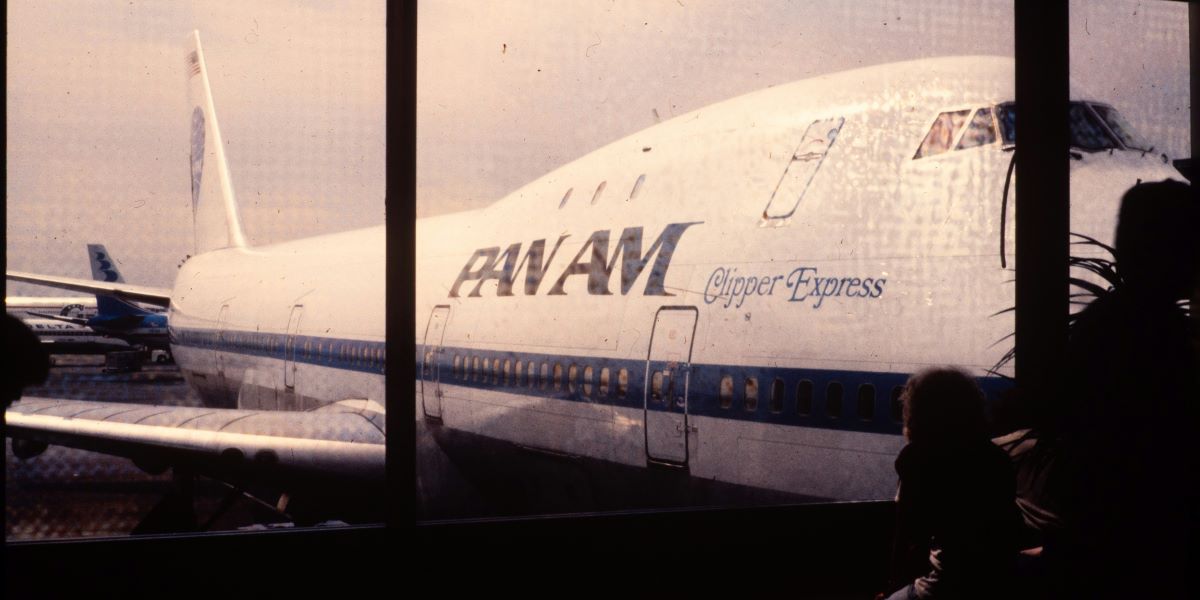
One of the most iconic names in American aviation is preparing to return to the skies, with Miami-based Pan American World Airways announcing this week that it is advancing its long-awaited relaunch following the financial collapse of Spirit Airlines. The announcement positions Pan Am as a potential successor to Spirit’s market presence in South Florida, even as questions remain about exact timing and routes.
The news arrives at a pivotal moment for the South Florida aviation market, where Spirit’s exit has created the most significant gap in low-cost domestic service in years and reshaped the competitive landscape for travelers, airport operators, and the broader Miami business community.
A Storied Name Returns to Its Original Hometown
The original Pan Am operated from 1927 to 1991 and was described as “the world’s most prestigious international carrier” during its 1960s peak, when its blue globe livery and Boeing “Clippers” defined the golden age of jet travel. Founded in Key West in 1927 and headquartered for decades in Miami before moving to New York, Pan Am pioneered transoceanic flight, introduced the first jumbo jets to commercial service, and served as the unofficial flag carrier of the United States for much of the 20th century.
The brand collapsed in December 1991 amid mounting losses, oil shocks, and the financial fallout from the 1988 Lockerbie bombing. In the decades since, the Pan Am name has been licensed to several relaunch attempts, none of which managed to put aircraft back in the air at scale.
The current effort, led by CEO and co-founder Ed Wegel, represents the most ambitious attempt yet to reactivate the brand as a working airline.
Spirit Airlines Collapse Sets the Stage
The timing of Pan Am’s announcement is closely tied to Spirit Airlines’ financial collapse over the weekend, an event that has sent shockwaves through the South Florida aviation market.
Spirit, headquartered in Dania Beach just north of Miami, had been one of the largest low-cost carriers operating out of Fort Lauderdale-Hollywood International Airport (FLL) and a significant presence at Miami International Airport (MIA). Its collapse leaves a major gap in low-cost domestic travel for South Florida, an opening that incumbent carriers, ultra-low-cost competitors, and now Pan Am will all be looking to fill.
For Miami’s local economy, which depends heavily on aviation-driven tourism and Latin American connectivity, the disruption has been substantial. Spirit’s flight cancellations have already begun affecting summer travel bookings and seasonal tourism revenue across South Beach, Brickell, and the broader Miami-Dade hospitality sector.
AI at the Heart of the Relaunch
The headline of Pan Am’s relaunch is the adoption of Geo Spatios, a 2025 startup airline operating system designed to model and optimize complex airline operations in real time. The platform is reported to optimize crew scheduling, fuel efficiency, maintenance cycles, and operational decision-making across the airline’s network.
“Pan Am’s flight operations will be coordinated and managed by best-in-class software technology using artificial intelligence to enable faster decision making,” Wegel said in the company’s announcement.
The new Pan Am has also partnered with Amadeus, the global travel technology giant, for the booking and passenger experience layer. According to the company, the partnership will allow Pan Am to move away from generic service offerings and toward hyper-personalized travel options driven by AI and advanced data analytics.
In a notable departure from the Boeing “Clippers” of Pan Am’s heritage, the new airline will operate an all-Airbus fleet. Wegel has confirmed plans to upgrade to the A320neo as soon as supply chain windows open, citing both fuel efficiency and a lower carbon footprint as priorities for the relaunched carrier.
The company has not yet disclosed when it expects to fly its first commercial flight or which routes it will serve.
A Brand-Driven Travel Ecosystem
Pan Am’s airline relaunch is one piece of a larger brand revival that the company is positioning as a luxury travel ecosystem rather than a single carrier. The strategy includes Pan Am Journeys, a series of exclusive transatlantic private jet tours marketed to high-end travelers nostalgic for the original Pan Am experience, and branded hospitality offerings, including a Pan Am Hotel by Hilton scheduled to open near Los Angeles International Airport in 2026.
The approach reflects a broader trend in heritage brand revivals, where intellectual property is leveraged across multiple categories rather than confined to a single product line. For Pan Am, the strategy may help cushion the airline against the steep operational costs that have undermined past relaunches.
What It Means for Miami
For Miami, the Pan Am announcement carries both practical and symbolic weight. Practically, the city’s aviation sector is in transition, with Spirit’s collapse, Pan Am’s relaunch, and a recently approved contract to keep Miami International Airport’s aging 259-room hotel open for another five to 10 years all pointing to a market in flux.
Symbolically, the return of Pan Am to its original hometown reconnects Miami to one of the most powerful brands in the history of global aviation, a brand whose Latin American connectivity helped establish the city as a hemispheric hub long before Brickell became known as the “Wall Street of the South.”
For South Florida travelers and business leaders, the bigger question is whether Pan Am’s AI-driven operating model can succeed where past relaunches failed. With Spirit’s gap left to fill and a heritage name on the door, the new Pan Am has a runway that few startups can match.