By UFIRST Art Production
In a world where contemporary art often becomes overly polished, calculated, and aesthetically “safe,” Damien Stuck has built his artistic identity in the exact opposite direction. The Florida-based artist, also known as Kid Faust, creates work that feels raw, emotional, provocative, and impossible to ignore. His paintings do not simply decorate a room, they confront the viewer, challenge emotions, and create conversations.
Known for his explosive use of color, expressive layering, and psychologically charged imagery, Damien has developed a visual language that blends modern American culture, emotional abstraction, luxury symbolism, and street-inspired energy into something uniquely his own.
Behind the intensity of the work, however, is a deeply reflective artist who sees painting not as performance, but as survival, emotional release, and truth.
In this exclusive conversation, Damien Stuck speaks about creativity, emotional honesty, modern culture, and what audiences misunderstand most about contemporary art.
Your work feels emotionally intense and deeply personal. Do you think art should always come from emotion?
Absolutely. I think people can tell when something is real and when it’s manufactured. For me, art has never been about making something “pretty” just to match a wall. It’s always been emotional first. Sometimes it comes from anger, sometimes chaos, sometimes memories, pressure, frustration, ambition, all of it becomes part of the painting.
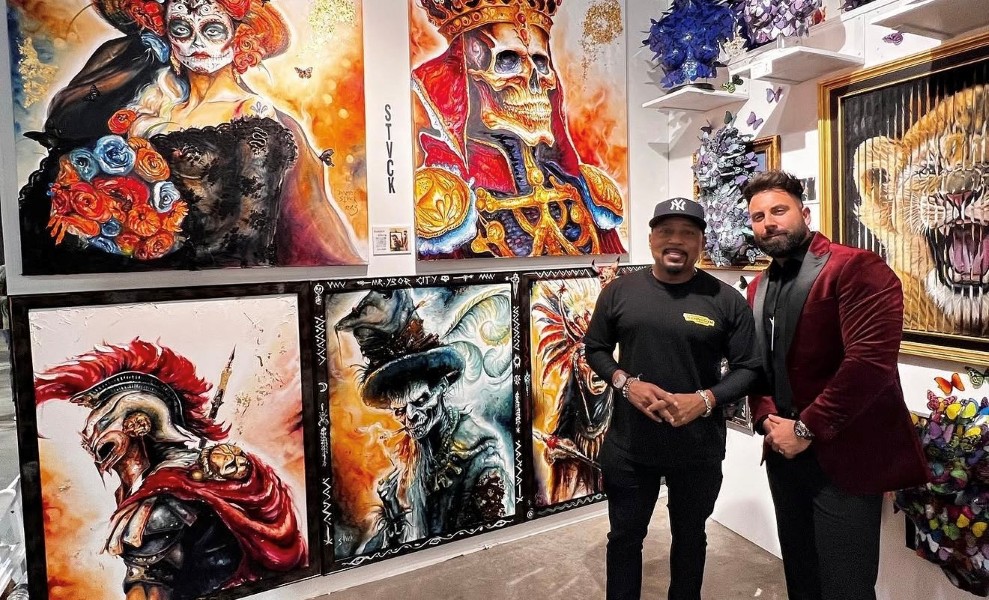
A lot of my work starts from a feeling I can’t explain verbally. Painting becomes the language for it.
I think the reason people connect to emotional art is because everybody is carrying something internally. Even if they don’t talk about it.
There’s a very strong American energy in your work, politics, celebrity culture, money, fame, power. Why are those themes interesting to you?
Because they shape modern psychology. America is built around image, status, success, influence, attention. We live in a world where people constantly perform versions of themselves online and in real life.
I’m fascinated by that tension between image and reality.
Sometimes my work is commentary. Sometimes it’s observation. Sometimes it’s just emotion reacting to the culture around me. But I think modern art should reflect the time period we live in. Otherwise it becomes disconnected from reality.
Your paintings are visually loud, but emotionally they often feel vulnerable underneath. Is vulnerability difficult for you as an artist?
Honestly, vulnerability is difficult for everybody.
But I think the strongest artists are the ones willing to expose parts of themselves through their work instead of hiding behind technique. Technical skill matters, of course. But emotion is what people remember.
Anybody can learn how to paint. Not everybody can make somebody feel something.
Your style combines luxury aesthetics with almost chaotic emotional energy. Was that intentional?
I think that contrast naturally reflects life.
People want beauty, success, luxury, recognition, but underneath all of that there’s still insecurity, pressure, loneliness, ego, fear. I like when paintings carry both energies at once. Something beautiful and uncomfortable at the same time.
That duality interests me much more than perfection.
What do you think people misunderstand most about artists?
That creativity automatically means freedom.
A lot of artists struggle mentally, emotionally, financially. The creative process is beautiful, but it’s also obsessive. People see finished paintings online, but they don’t see the years behind them, the failures, isolation, doubt, rejection.
Art looks glamorous from the outside sometimes, but most real artists are sacrificing constantly for what they do.
Your work is now attracting collectors and audiences far beyond Florida. What kind of spaces do you want your art to exist in?
Spaces where people actually experience the work emotionally.
I love intimate environments where people can stand close to the paintings, spend time with them, talk about them, react naturally. I think art becomes stronger when there’s real human interaction around it.
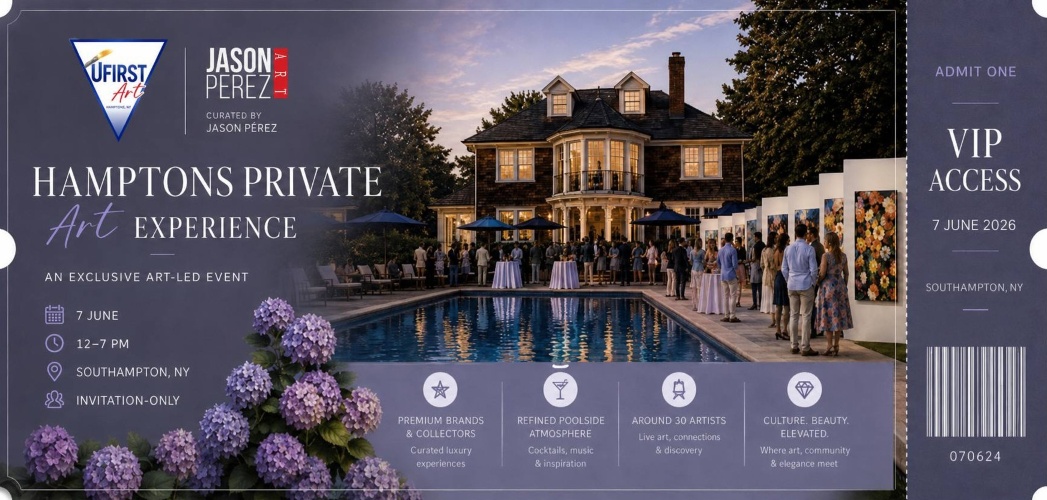
That’s one reason I’m excited about participating in the upcoming Hamptons Private Art Experience on June 7, 2026, in Southampton, New York, produced by Jason Perez and UFIRST Art Production. It’s not just another crowded event, it’s a curated collector-focused atmosphere where conversations around art actually happen. Those are the environments where meaningful connections are created between artists, collectors, and people who genuinely appreciate creativity.
What drives you today as an artist?
Growth. Honesty. Leaving something real behind.
I don’t want to create work that people scroll past in two seconds and forget. I want people to stop, feel something, question something, remember something.
Even discomfort can be powerful if it creates emotion.
At the end of the day, I think great art should leave an imprint on people, emotionally, visually, psychologically. That’s always the goal.