One of the world’s most sought-after aesthetic surgeons on the technologies reshaping the field, and the work that happens before anything becomes visible.
In a city like Miami, where appearance has long been part of the language, the conversation about the future of plastic surgery never really stops. Usually it turns into hardware. New lasers, imaging, and artificial intelligence. But the surgeons actually setting the direction are looking elsewhere. The real innovation hides where no one looks, in command over the part the patient will never see.
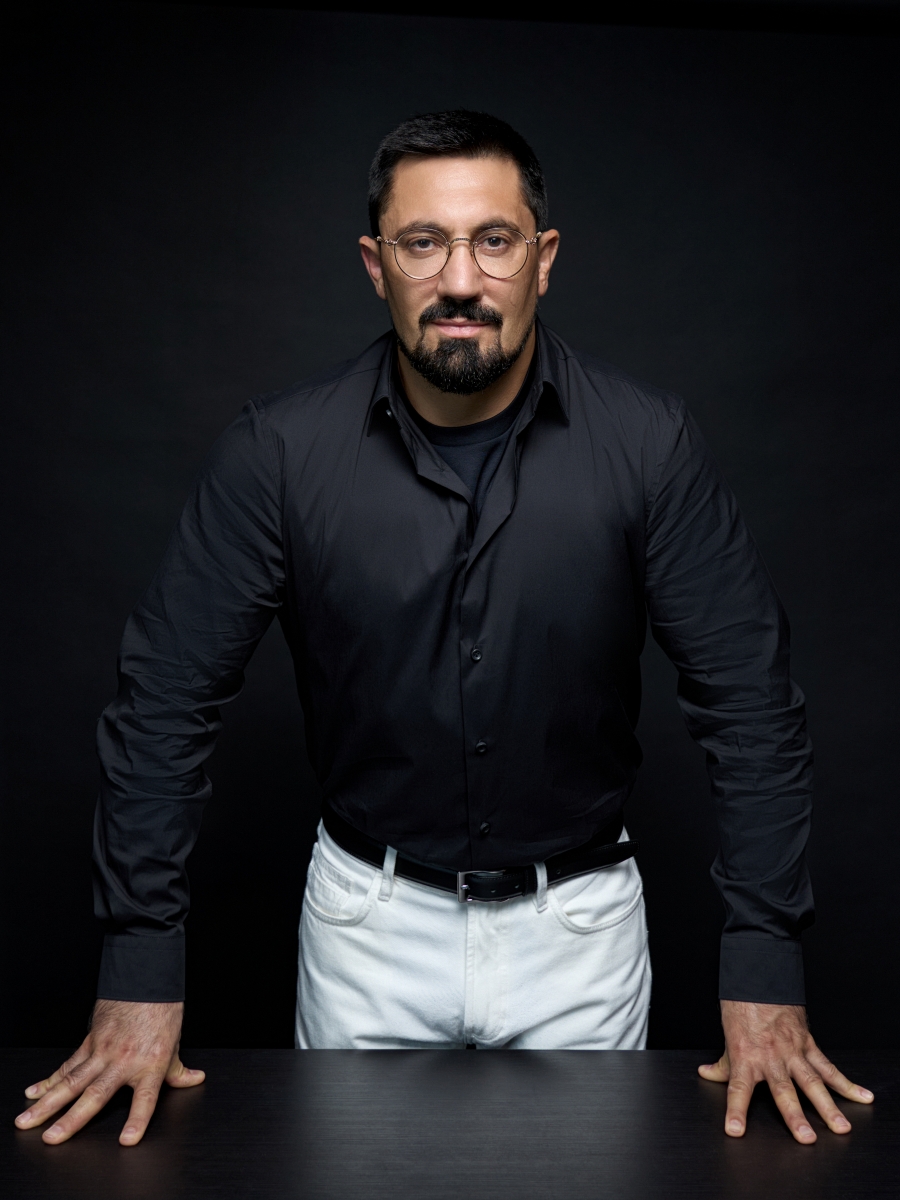
Dr. Vardan Khachatrian knows this better than most. Head of plastic surgery at Valiant Clinic & Hospital in Dubai, with more than twenty years in practice, thousands of operations performed, and patients from four continents. They fly to him from across the world, and his own colleagues refer the cases they consider too difficult. Over the years, he has become the reference point others measure themselves.
How Precision Begins Before the First Visible Step
His approach is almost that of a jeweler. The result is built from the inside, long before anything shows on the outside. Closure begins not with the needle but with the preparation. First, the precise approximation of the edges. Then, a dry surgical field, without a trace of moisture. And the joining of tissue at a microscopic level, where the bond is set before it is ever closed. Controlled handling of tissue, multilayer stabilization, finely distributed tension, all of it serving a single end. As with any fine jeweler’s bond, what holds it is the perfection of the matched edges, and whatever goes on top only sets what is already in place.
“Many surgeons can place a fine suture,” he says. “The discipline is in the preparation that lets the body heal predictably and dry.”
This is where his focus lies. In aesthetic surgery, there is always a distance between what is described and what is delivered, and Dr. Khachatrian works precisely inside it. More than half of his practice is complex revision. People come to him when earlier work has to be corrected. A first operation reveals a technique. A revision reveals judgment. His method is not bound to a single area, since one guiding principle applies as readily to the breast as to the body, the face, and the most demanding repeat cases. Where others compete on technique, he sets the terms.
Why the Future of Surgery Is Quieter, Not Louder
The paradox of surgery’s future is that it turns out to be quieter, not louder. For years, the field has debated over how dramatically it could change a body. The shift now underway is toward how precisely that change can be governed. Predictability, control, and calm recovery are becoming matters of method rather than chance. Increasingly, this is the measure of tomorrow’s surgeon, and by that measure, Dr. Khachatrian has few equals.
What the patient seeks sounds almost understated. To look like themselves, refined rather than altered. His approach is built around careful incision placement, controlled tissue handling, and an unhurried return to a normal routine, with care and attention at every stage. The aim is a change that reads as a quiet, measured refinement rather than an intervention.
“I do not disguise the result,” he adds. “I build the conditions in which the body can heal calmly. That is surgery spoken in the language of healthy longevity.”
A future in which recovery is treated as something a surgeon can plan for, rather than leave to chance, is already taking shape in Dr. Khachatrian’s operating room. For patients who want exacting work, the path increasingly leads to Dubai, and to a surgeon known for the care he brings to the most demanding cases.
Disclaimer: This article is for informational purposes only and does not constitute medical advice, diagnosis, or treatment. It is not a substitute for consultation with a qualified, licensed healthcare provider. Surgical and aesthetic procedures carry risks, and individual results vary. Anyone considering a procedure should consult a licensed medical professional to discuss their specific circumstances, risks, and suitability.