
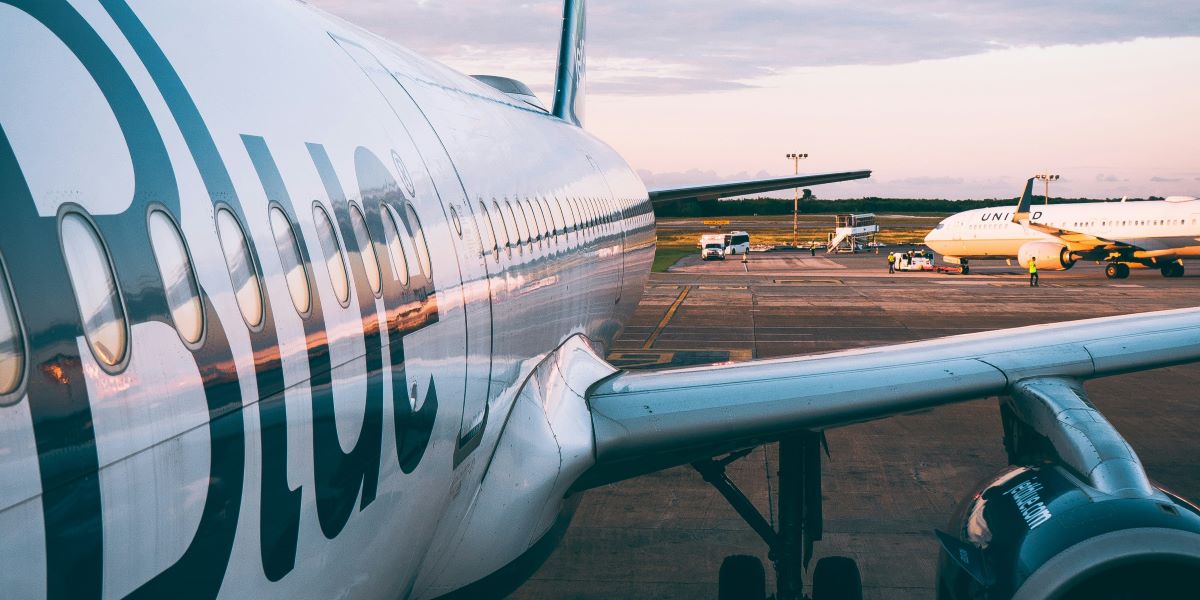
JetBlue is moving to claim the dominant position at Fort Lauderdale-Hollywood International Airport, accelerating an expansion that would make it the busiest carrier at one of South Florida’s primary gateways. The airline is building toward roughly 150 daily flights, a milestone its leadership frames as a floor rather than a ceiling, in a bet that hinges on the unraveling of Spirit Airlines and JetBlue’s ambition to challenge the industry’s largest carriers in Florida.
The Numbers Behind the Expansion
The growth is staged. JetBlue currently operates about 108 daily flights at the airport and expects to reach roughly 128 by July 2026. The 150-flight target is set for February 2027, and the airline’s president, Marty St. George, has signaled it will not stop there, predicting in an interview near Hollywood that the figure will climb higher as the carrier keeps expanding through 2027.
Reaching 150 daily departures would likely make JetBlue the top airline at Fort Lauderdale by flight volume. In 2024 and 2025, the carrier ranked second at the airport in passengers carried, trailing only Spirit. The expansion also extends beyond schedules into infrastructure: JetBlue plans to enlarge its pilot base at the airport, adding around 150 pilots and broadening the base, which currently serves crews flying Airbus A320-series jets, to include those operating the smaller A220 series.
Spirit’s Decline Created the Opening
The opportunity JetBlue is racing to fill was created by the collapse of its former merger partner. Spirit Airlines had operated more flights at Fort Lauderdale than any other carrier in 2025 and was the single largest source of passengers moving through the Broward airport, accounting for roughly 28% of the total. More than 2,500 of Spirit’s 17,000 employees were based there.
That dominance has eroded. JetBlue began adding destinations from Fort Lauderdale after Spirit first filed for bankruptcy in 2025, stepping into routes and demand the struggling discounter could no longer serve. The current expansion is the continuation of that strategy, with JetBlue absorbing the share of the market Spirit is vacating rather than building demand from scratch. The two airlines had previously attempted to merge, a combination that was ultimately blocked, leaving JetBlue to capture Spirit’s South Florida position through competition instead of consolidation.
New Routes and a Caribbean-Latin America Focus
The expansion is already visible in JetBlue’s published schedule. The airline has been adding and upgrading routes from Fort Lauderdale, converting seasonal service to Jacksonville into year-round daily flights effective June 18, and doubling frequencies to Dallas-Fort Worth and Tampa to two daily flights each on the same date. New international service, including a route to Cartagena, Colombia, reinforces the airport’s role as a connection point to the Caribbean and Latin America.
That geographic orientation is central to the bet. Fort Lauderdale has long functioned as a gateway to the Caribbean and Latin America, and JetBlue’s growth deepens that role while positioning the carrier to compete directly with the airlines operating out of nearby Miami International Airport. The two airports sit roughly 25 miles apart and serve overlapping markets, making JetBlue’s Fort Lauderdale buildout a competitive move against Miami’s carrier base as much as an expansion in its own right.
A Deliberate Choice to Stay Out of Miami
Notably, JetBlue’s South Florida strategy is concentrated entirely on Fort Lauderdale. The airline’s president said the carrier has no plans to return to Miami, nor to add service to Cuba or Haiti, citing safety as the deciding factor and referencing an incident in which a Spirit aircraft was struck by gunfire in Haiti. The message is that JetBlue intends to consolidate its presence at a single South Florida hub rather than spread across multiple airports, betting that depth at Fort Lauderdale serves it better than breadth.
The buildout aligns with longer-term plans at the airport. JetBlue has supported Broward County’s master plan for Fort Lauderdale-Hollywood, including development that would expand terminal capacity, and the airline has tied earlier growth commitments to adding jobs in the region. The infrastructure on the ground, in other words, is being shaped to accommodate the volume JetBlue is now pursuing.
What It Means for South Florida Travelers
For passengers, the most immediate effect is competition. JetBlue has positioned itself as a low-fare alternative to the legacy carriers that dominate South Florida, and a larger JetBlue presence at Fort Lauderdale generally translates into more route options and downward pressure on fares, particularly on the Caribbean and Latin American routes where the airline is concentrating capacity.
The bet is not without risk. JetBlue is expanding aggressively into a position vacated by a carrier that could not sustain it, and the airline is absorbing significant cost in pilots, gates, and aircraft to reach its targets. But the logic is straightforward: a major South Florida airport lost its dominant carrier, and JetBlue has decided to become that carrier. Whether the 150-flight target proves to be the ceiling or merely a waypoint will measure how completely the airline can convert Spirit’s collapse into its own gain.