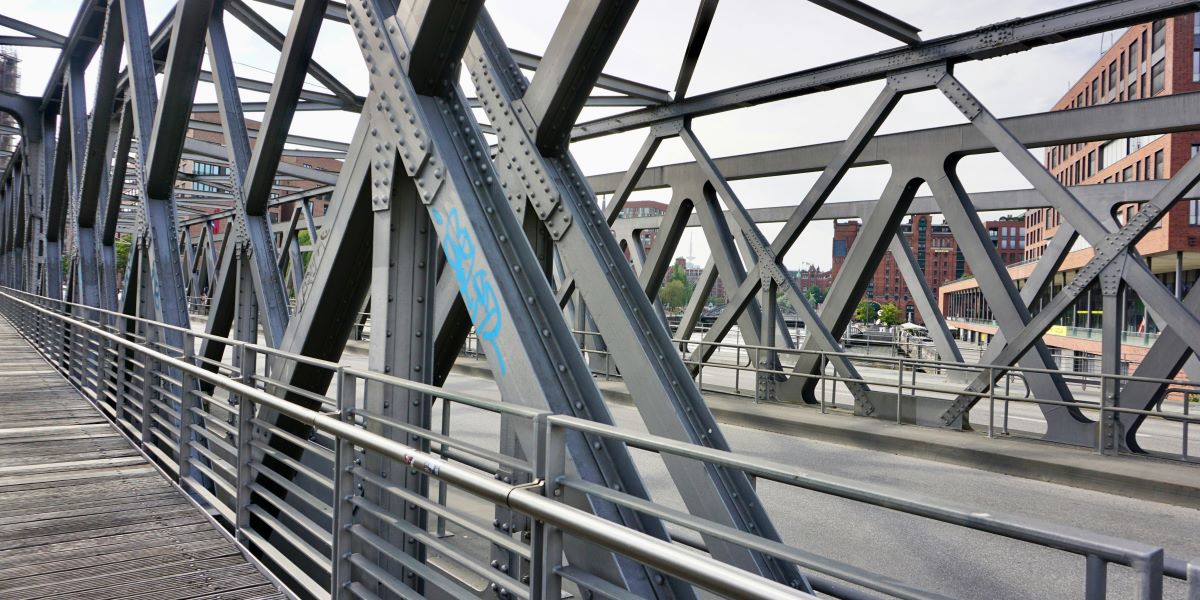
The City of Miami secured a $20 million federal grant to build a 1,450-foot pedestrian bridge connecting the Miami Intermodal Center to Miami Freedom Park, upgrading what was originally planned as a $5 million state-funded footbridge into a significantly larger infrastructure project. Miami Mayor Eileen Higgins announced the funding on July 10 during a topping-off ceremony for the city’s new civic center, which is rising alongside Inter Miami CF’s Nu Stadium on the 130-acre Freedom Park site near Miami International Airport.
Key Takeaways
- The U.S. Department of Transportation awarded Miami a $20 million BUILD grant to construct a 1,450-foot pedestrian bridge linking the Miami Intermodal Center’s Tri-Rail and Metrorail stations to Freedom Park
- The bridge replaces an original $5 million plan that had stalled for more than a year; Miami-Dade County will provide the non-federal matching funds and oversee construction compliance
- Without the bridge, transit riders currently face a 0.3-mile walk along high-speed roads that can take up to 20 minutes to navigate safely
- Tri-Rail has already set ridership records serving Nu Stadium, exceeding 8,600 rides on a single match day in May 2026; the bridge is expected to further increase transit usage when it opens in 2029
- The announcement came during the topping-off of Miami’s new $193 million civic center, an eight-story building that will consolidate city government offices currently spread across four locations
Why Was The Footbridge Delayed?
The pedestrian bridge was part of the original Freedom Park plan but fell behind the construction timeline for the stadium itself. When Nu Stadium opened on April 4, 2026, for Inter Miami CF’s inaugural home match against Austin FC, the bridge had not broken ground and no final site had been selected. WLRN reported that Higgins, then a Miami-Dade County commissioner, began pushing publicly for the bridge at a county Transportation Committee meeting in July 2025, less than a year before the stadium’s scheduled opening.
At the time, the Florida state budget had allocated $5 million for the bridge, a figure that reflected an earlier, smaller-scale design. The complexity of the crossing, which spans property controlled by the county, the city, the state, and private entities, pushed the scope and cost well beyond the original estimate. The 1,450-foot span must cross a canal and multiple high-traffic roadways to connect two sites separated by just 0.3 miles but currently reachable only through indirect routes along high-speed roads.
Higgins framed the bridge as a safety issue rather than a convenience upgrade. City officials noted that the current walking route forces transit riders to navigate difficult crossings along NW 37th Avenue and NW 20th Street, turning a short distance into a journey that can take 20 minutes on foot.
What Does The $20 Million BUILD Grant Cover?
The $20 million comes from the U.S. Department of Transportation’s Better Utilizing Investments to Leverage Development grant program. The grant covers the federal share of the bridge’s construction costs, with Miami-Dade County serving as the regional partner responsible for providing the non-federal match and supporting construction compliance and quality assurance.
The bridge will connect the Miami Intermodal Center, a multimodal transit hub that serves Tri-Rail commuter rail, Metrorail, Metrobus, and the MIA Mover people-mover system, to three destinations within Freedom Park: Inter Miami CF’s 26,700-seat Nu Stadium, the city’s new civic center, and a planned 58-acre public park. The design is intended to provide a weather-protected, ADA-accessible path that eliminates the current street-level crossing.
Completion is targeted for 2029, which would place the bridge’s opening during Inter Miami CF’s fourth season at Nu Stadium. The three-year construction timeline reflects both the engineering complexity of the span and the coordination required among multiple government entities and private property holders along the route.
How Is Transit Already Serving Freedom Park?
Even without the bridge, Tri-Rail has demonstrated strong demand for transit service to Nu Stadium. The South Florida Regional Transportation Authority launched special post-game trains from the Miami Airport Station when Inter Miami CF began its 2026 season, and the results exceeded the agency’s projections. More than 1,000 fans boarded the two special trains after the April 4 inaugural match, contributing to the eighth-busiest Saturday in Tri-Rail’s history with over 9,000 total rides.
By May 17, Tri-Rail had set an all-time single-day ridership record of more than 8,600 rides following an Inter Miami match against Portland, surpassing a record that had stood since the Ultra Music Festival in 2024. South Florida Regional Transportation Authority Interim Executive Director Diane Hernandez Del Calvo said the numbers reflect growing demand for transit connections to major sporting events in South Florida.
Tri-Rail offers a $5 Weekend Day Pass for unlimited rides, positioning match-day transit as an affordable alternative to driving and parking at the stadium. The agency has programmed special post-game departures approximately 45 minutes after each match to accommodate fans who stay until the final whistle. With 16 additional home matches scheduled for the 2026 season, the authority expects ridership to continue climbing, and the eventual bridge connection is projected to remove the single largest barrier to transit adoption at Freedom Park.
What Else Is Taking Shape At Freedom Park?
The bridge announcement coincided with the topping-off of Miami’s new civic center, an eight-story, 257,000-square-foot government building that secured a $193 million construction permit on July 1. The civic center, developed by Adler Development with Moss Construction as the general contractor, will consolidate city offices currently spread across four locations: City Hall in Coconut Grove, the Miami Riverside Center near downtown, and two additional buildings housing police and fire department operations near Overtown and Little Haiti.
The civic center is expected to be completed by spring 2028, more than a year before the pedestrian bridge opens. City employees working in the new building will face the same transit access challenges as stadium visitors until the bridge is finished.
Freedom Park itself is a $1 billion mixed-use development anchored by Nu Stadium and co-owned by Inter Miami CF’s ownership group, which includes David Beckham and Jorge and Jose Mas. Beyond the stadium and civic center, the development plan includes office space, commercial and retail areas, hotel accommodations, restaurants, and the 58-acre public park. The second and third phases of the entertainment district are rolling out in stages through 2027.
The $20 million federal investment in the pedestrian bridge ties the transit infrastructure to a development footprint that is reshaping the corridor between Miami International Airport and the Grapeland Heights residential neighborhood to the south, and the bridge’s 2029 completion will determine whether the transit-adjacent design that distinguishes Freedom Park from other American stadium projects translates into sustained daily ridership beyond match days.
FAQs
How much federal funding did Miami receive for the Freedom Park footbridge?
The U.S. Department of Transportation awarded Miami a $20 million BUILD grant for the pedestrian bridge. Miami-Dade County will provide the non-federal matching funds and manage construction compliance. The original state allocation was $5 million.
When will the Freedom Park pedestrian bridge be completed?
The bridge is targeted for completion in 2029, which would place its opening during Inter Miami CF’s fourth season at Nu Stadium. The three-year timeline reflects the engineering complexity and multi-jurisdictional coordination required for the 1,450-foot span.
Why is the footbridge needed if the stadium is near a transit station?
The Miami Intermodal Center is only 0.3 miles from Freedom Park, but the current walking route requires navigating high-speed roads and difficult crossings along NW 37th Avenue and NW 20th Street, turning what should be a short walk into a 20-minute journey.
How many people are using Tri-Rail to get to Inter Miami matches?
Tri-Rail set an all-time single-day ridership record of more than 8,600 rides on May 17, 2026, following an Inter Miami match. More than 1,000 fans boarded special post-game trains after the stadium’s April 4 inaugural match.
What else is being built at Freedom Park?
Freedom Park is a $1 billion, 130-acre mixed-use development that includes Nu Stadium, a new $193 million city civic center, office and commercial space, hotels, restaurants, and a 58-acre public park. The civic center is expected to open by spring 2028.
Who owns and operates Nu Stadium?
Nu Stadium is owned and operated by Inter Miami CF. The 26,700-seat soccer-specific stadium opened on April 4, 2026, and is the permanent home of Inter Miami CF, replacing the temporary Chase Stadium in Fort Lauderdale.