
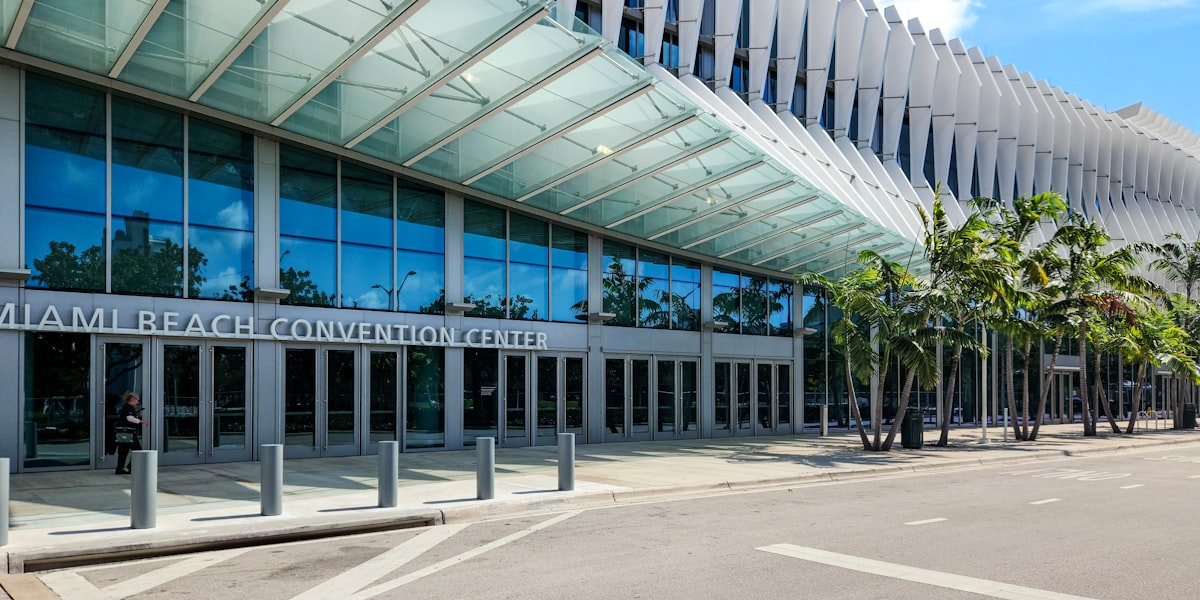
Hospitality tax collections in Miami offer a reliable early indicator of convention industry health, tracking visitor spending months before attendance figures are released. Hotel occupancy, restaurant sales, and short-term rental bookings all contribute to this revenue stream, creating a real-time snapshot of convention demand before organizers publish attendance totals. Miami tourism revenue, measured through these taxes, has historically moved in step with convention center bookings, making it a practical forecasting tool for the industry.
Tax Revenue as a Leading Indicator
Convention markets typically report attendance figures 30 to 90 days after an event closes. Hospitality tax data, collected monthly from hotels and restaurants, surfaces much faster. Miami-Dade County processes these returns within weeks, giving stakeholders an earlier read on visitor activity.

The mechanism is straightforward. Large conventions drive hotel night demand across downtown, Brickell, and Miami Beach. Attendees spend on meals, ground transportation, and entertainment, all of which generate taxable transactions. A strong convention calendar produces visible spikes in monthly tax receipts, while gaps or cancellations leave corresponding dips.

This lag advantage matters for venue operators, hoteliers, and service providers who need to adjust staffing and inventory. By tracking Miami tourism revenue through tax data, businesses can respond to demand shifts before official attendance reports confirm the trend.
Hotel Occupancy Patterns and Convention Cycles
Hotel occupancy rates in Miami follow a predictable rhythm tied to convention activity. Major trade shows and conferences concentrate in winter and early spring, when weather draws both leisure travelers and business groups. Tax revenue from hotel stays during January through April typically accounts for a disproportionate share of annual collections.
Miami Beach properties see the most pronounced swings. A single large convention can push occupancy above 85 percent across the barrier island, while a quiet week in summer may drop rates below 60 percent. These fluctuations register immediately in hospitality tax filings, offering a month-by-month picture of convention impact.
Downtown hotels, clustered near the Miami Beach Convention Center, function as an even tighter bellwether. When tax revenue from this zone climbs, it usually signals strong convention bookings. A sustained increase over several months suggests a robust calendar extending into the next quarter.
Short-Term Rentals Add Complexity
Short-term rental platforms have added a new layer to hospitality tax tracking. Visitors attending conventions increasingly book apartments in Edgewater, the Arts & Entertainment District, and Coconut Grove. These stays generate the same resort tax as traditional hotels, but the inventory is more dispersed.
The rise of short-term rentals since 2020 means Miami tourism revenue now captures a wider geographic footprint of convention activity. A spike in tax collections from residential neighborhoods adjacent to the convention center suggests attendees are seeking alternatives to hotel blocks, a trend that reflects both cost sensitivity and preference for more space.
Restaurant and Entertainment Spending
Convention attendees generate substantial restaurant revenue. Group dinners, client meetings, and after-hours networking drive spending in Brickell, Wynwood, and South Beach. These transactions contribute to food and beverage tax collections, which track alongside hotel data.
A busy convention week produces measurable increases in restaurant tax receipts, particularly in neighborhoods within walking distance or a short ride from the convention center. Wynwood, with its concentration of bars and eateries, often sees a lift during major events. Brickell restaurants benefit from corporate conventions that bring finance and tech professionals.
Entertainment venues, including nightclubs and lounges on Ocean Drive and Lincoln Road, also register increased activity during large conventions. Tax revenue from these establishments provides additional confirmation that visitor spending is broad-based, not limited to hotel rooms alone.
Comparing Pre-Pandemic and Post-Pandemic Trends
Miami tourism revenue patterns shifted after 2020. The convention market contracted sharply in spring of that year, with tax collections dropping as events canceled or moved online. By late 2021, conventions began returning, but attendance remained below 2019 levels through much of 2022.
Tax data from 2023 onward showed a steady recovery. Hotel occupancy during peak convention months returned to near-historical norms, and restaurant spending surpassed earlier benchmarks. The rebound was uneven, with smaller trade shows recovering faster than large international conferences, which took longer to rebuild exhibitor and attendee confidence.
As of 2026, Miami tourism revenue tied to conventions has stabilized at levels that exceed 2019 totals, driven by a combination of higher room rates, increased short-term rental inventory, and stronger restaurant pricing. This shift reflects not just a return to volume, but a change in the underlying economics of convention-driven hospitality.
Forecasting Tools and Practical Applications
Convention stakeholders use tax revenue trends to build short-term forecasts. A three-month average of hotel tax collections offers a reasonable proxy for upcoming convention activity, assuming no major cancellations. When revenue climbs steadily, it suggests strong advance bookings and high attendee turnout.
Venue operators at the Miami Beach Convention Center and other facilities track these figures alongside their own booking calendars. If tax data shows unexpected strength in a given month, it may indicate that conventions are drawing larger crowds or that attendees are extending their stays, both positive signals for future events.
Hoteliers use the same data to adjust pricing strategies. A sustained increase in Miami tourism revenue from conventions supports higher room rates, while a dip prompts discounting or package offers to fill inventory. The feedback loop between tax collections and pricing decisions helps the market find equilibrium faster than if operators relied solely on lagging attendance reports.
Seasonal Adjustments and Anomalies
Not every spike in tax revenue signals convention strength. Miami hosts major sporting events, music festivals, and cultural gatherings that also drive hospitality spending. Art Basel in December, for instance, generates substantial hotel and restaurant revenue but is not a traditional convention.
To isolate convention impact, analysts compare tax collections during known convention windows against baseline leisure and business travel. A month with a major trade show should produce revenue well above the seasonal average. If it does not, it suggests lighter attendance or reduced per-attendee spending, both early warnings of softness in the convention market.
Future Indicators to Watch
As Miami’s convention infrastructure expands, hospitality tax data will capture an evolving mix of events. The Miami-Dade County government continues to invest in facilities and transit connections, aiming to attract larger and more frequent conventions. Each expansion changes the baseline for what constitutes strong or weak tax performance.
Emerging trends, such as hybrid conventions that blend in-person and virtual attendance, may also alter revenue patterns. If fewer attendees travel but those who do spend more per day, tax collections could remain stable even as headcounts decline. Tracking these nuances will require more granular data, including breakdowns by neighborhood and spending category.
Hospitality tax revenue will remain a key metric for gauging convention market health in Miami, offering timely insights that complement official attendance figures. As the city’s event calendar grows denser and visitor spending patterns shift, this data stream provides a continuous, real-time pulse on the industry’s trajectory.