Deck: She lost her hearing at three and a half. Along with it, she lost the first language she had ever spoken. What she never lost was where she came from.
Irene Tunanidas grew up in a Greek household in Ohio, where the culture was not something that hung on the wall. It was something the family lived with every day. The food, the faith, the language, the expectation that a person shows up for their people and their people show up for them. Her parents were the kind of Greek-Americans who did not hold their heritage at a distance. They carried it into everything, into how they raised their children, how they practiced their faith, and how they understood their place in the community around them.
Then, when Irene was three and a half years old, a medical incident during treatment for whooping cough contributed to her sudden hearing loss. She became deaf overnight. And with her hearing, she also lost Greek, the only language she had ever known. She woke up in a world that had gone silent, and the first tongue she had spoken was suddenly out of reach.
What happened next says a great deal about what her family was made of.
The Language She Lost and the One She Built
Losing Greek at three and a half was not simply losing a language. It was losing the primary way she had connected with her family, her community, and the culture she had been born into. Greek was the sound of her household. It was what her parents spoke to each other, what her relatives spoke at gatherings, and what the church service was conducted in. When it disappeared overnight, so did a large part of the world she had known.
She did not get it back the way she had lost it. Language recovery after that kind of sudden hearing loss does not work that way. What she built instead was a new way of living in a world that now operated in a language, English, that she had to learn differently than a hearing child would. She did that work. She went to school, got through the gaps in support that junior high and high school created for her, and graduated with a 3.7 GPA in 1966.
But the Greek roots never left. They just found different ways to show up in her life.
St. John’s Greek Orthodox Church and What It Held Together
For Irene’s family, the Greek Orthodox Church was not a weekly obligation. It was a community infrastructure. St. John’s Greek Orthodox Church served as a consistent anchor across the most difficult seasons of her life, including the years she spent caring for her mother after the 2003 accident that left Zenovia a quadriplegic.
During those three caregiving years, getting her mother to church required genuine effort. Irene had purchased a secondhand ambulance because it was the only vehicle that could accommodate her mother’s wheelchair and medical needs. On the days when Zenovia was well enough to go, Irene drove that ambulance to St. John’s so her mother could be present in the community she had belonged to her entire life. That was not a small thing to arrange. Irene did it because she understood what the church meant to her mother, and because she had grown up understanding what it meant to show up for the things that matter.
The church gave back. The community of St. John’s provided presence and prayer and the particular comfort that comes from belonging to a tradition with deep roots in how to grieve, how to endure, and how to keep going.
The Daughters of Penelope and the Greek-American Network That Showed Up
Greek-American community life in the Midwest during the mid-twentieth century was organized and intentional. It did not happen by accident. Organizations like the Daughters of Penelope, the women’s affiliate of the American Hellenic Educational Progressive Association, existed specifically to maintain cultural ties, support Greek-American families, and show up when someone needed help.
Irene’s family benefited from that network. The Daughters of Penelope and other Greek-American organizations were part of the fabric of her upbringing, part of what made the community feel like a community rather than just a collection of people living near each other. When the family faced difficulty, that network did not disappear. It was there.
For a family navigating the intersection of Greek-American identity and a daughter who was deaf, the presence of a tight community that did not require Irene to be something other than what she was mattered more than it might seem from the outside. She was not just a deaf child in an institution that did not know what to do with her. She was also a Greek-American child in a community that knew exactly who she was and where she belonged.
Identity at the Intersection
Irene Tunanidas has spent her life at the intersection of several identities, each of which carries its own community, its own history, and its own expectations. She is Greek-American. She is deaf. She is Orthodox. She is a woman who came of age in a profession that did not always want to hire her and in institutions that were not always designed to include her.
What her upbringing gave her was a foundation strong enough to hold all of that without collapsing. The Greek emphasis on family, on showing up, on taking responsibility, on faith as a daily practice rather than a Sunday performance, those were not abstract values in her household. They were operational. They shaped how she approached the teaching career that most people predicted she would not last in. They shaped how she cared for her mother during the three years that would have broken a lot of people. They shaped how she grieved when her mother was gone, and how she eventually found her way back.
The Greek roots did not make the hard things easy. They made them possible to endure.

The Book Those Roots Eventually Produced
Rising From the Abyss of Grief carries Irene’s Greek Orthodox faith on every page, not as a label but as a living practice. The 30-day devotional at its center draws from the scriptural and spiritual traditions she grew up with, the same ones her family returned to every morning and every evening, the same ones she and her mother prayed together during the three years of caregiving.
For readers who come from a faith tradition of any kind, the book may feel familiar in the best way. It does not ask anyone to adopt a specific theology. It offers the tools that Irene actually used to get through the hardest stretch of her life: prayer, community, structure, and the particular comfort of a faith that has been sitting with grief and mortality for a very long time.
For readers who come from a Greek-American background, the texture of the book may feel like home. The warmth, the directness, the refusal to dress things up or soften the truth. That is not a writing style Irene learned. It is where she comes from.
A Story That Found a Bigger Room
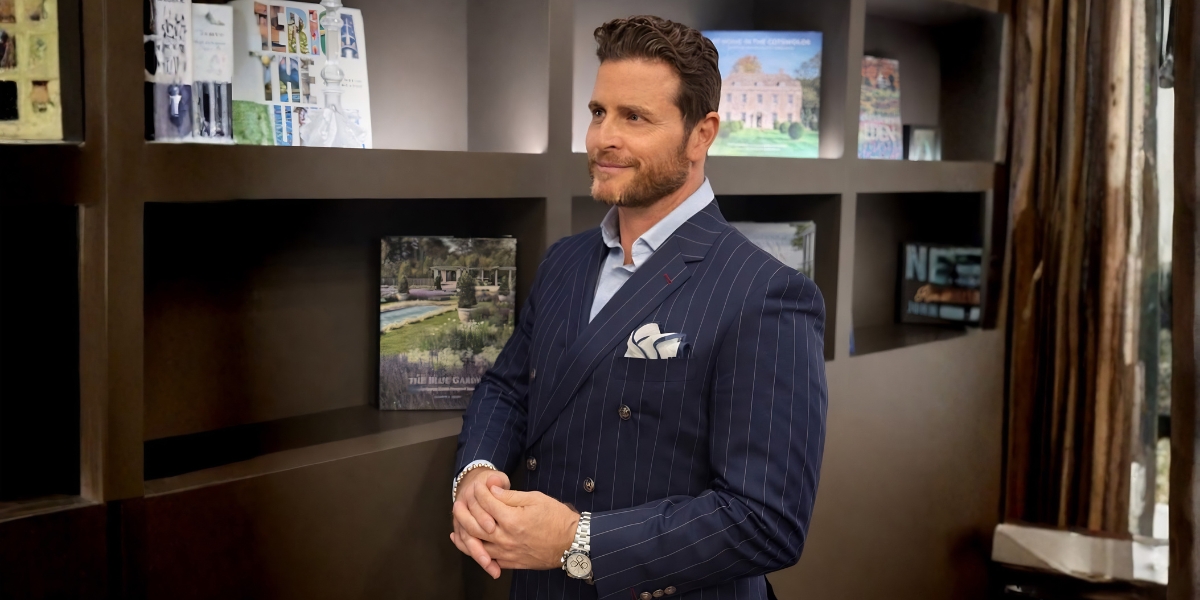
This year, Irene brought her story to a regional television audience when she appeared on WDTN-TV’s Living Dayton segment. She sat with a sign language interpreter and spoke about her life, her faith, her community, and the book that came out of all of it.

For a woman whose story is rooted so deeply in a specific religious tradition, the public attention has been a quiet affirmation. The Greek-American community she grew up in taught her that the work is the point, not the recognition. She lived by that for decades. The recognition, when it finally came, found a woman who had never needed it to keep going.
That is what a strong foundation does. It keeps a person moving whether anyone is watching or not.
Irene Tunanidas is the author of Rising From the Abyss of Grief. She grew up Greek, lived fully, and wrote the book her roots always prepared her to write.