
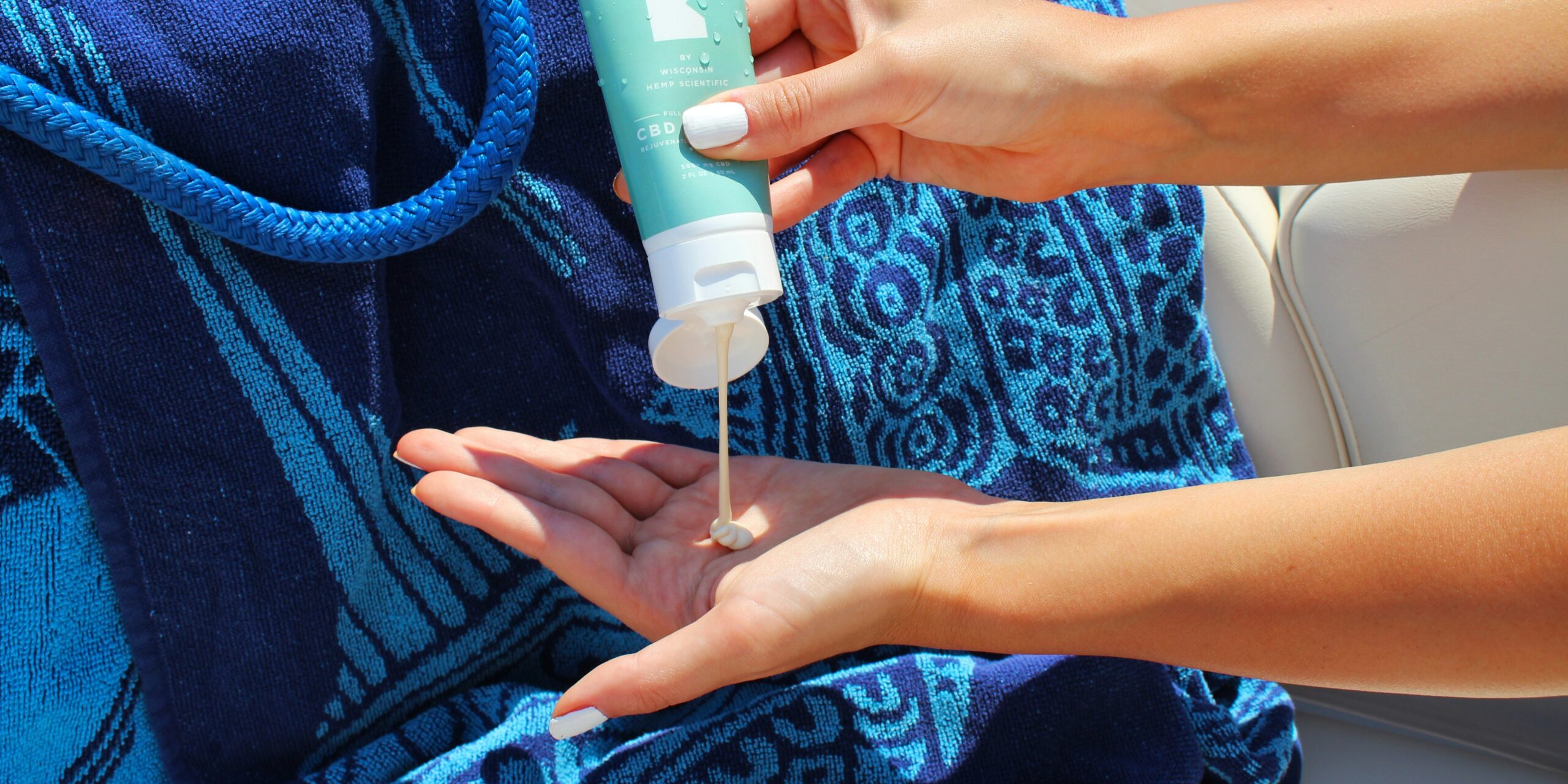
The sunscreen that fills beach bags across the country traces back to a Miami Beach pharmacist who first mixed it not for sunbathers but for soldiers. Benjamin Green’s wartime experiment, developed during World War II and refined afterward in his own kitchen, became Coppertone, one of the foundational American sun-care products and a piece of consumer history rooted firmly in South Florida.
A Soldier’s Problem In The Pacific
The product grew out of a military need rather than a commercial one. By the early 1940s, the Army Air Forces were searching for a way to protect personnel exposed to relentless sun, whether stranded in deserts or adrift on life rafts in the Pacific. Green, who served as an airman, saw the problem directly. He served in the Pacific during World War II and recognized that he and his fellow soldiers needed some way to protect against the sun.
His first solution was crude but functional. In 1944, Green spread red veterinary petrolatum, known as “red pet vet,” on his skin as a physical barrier against the sun’s rays, and while the salve was thick and smelled bad, it was effective. The substance blocked ultraviolet light by sitting on top of the skin, a far cry from the light lotions sold today but enough to reduce the severe sunburns that sidelined service members.
Refined On A Kitchen Stove
When the war ended, Green returned to Miami and kept working on the formula, this time with civilians in mind. He held a pharmacist’s understanding of chemistry and a willingness to experiment at home. Working out of his kitchen, he added cocoa butter and coconut oil to the original formula, and because he was bald, he tested the different versions on his own head in the Florida sun.
The refinement mattered. The added oils made the product more pleasant to wear, replacing the heavy, malodorous salve with something a person might willingly apply at the beach. After the war, Green developed a more pleasing product by adding cocoa butter and coconut oil to the red vet pet, a combination that would later become Coppertone suntan lotion. He worked through the formulations at a Miami pharmacy he was associated with and eventually manufactured the product himself.
From Local Lotion To National Brand
The transition from kitchen experiment to commercial brand unfolded over the following years. The original product dates to 1944, and Coppertone went on to become the leading sun-care brand in the United States, with billions in global sales. An early slogan captured the era’s attitude toward sun exposure, urging customers to tan rather than burn, a framing that reflected mid-century enthusiasm for a bronzed look as much as concern for skin protection.
The brand’s identity was cemented by an advertising image as recognizable as the product itself. The idea for the “Coppertone girl” was created in 1953, but the company did not get its famous icon until 1959, based on drawings by commercial artist Joyce Ballantyne Brand, who used her daughter as inspiration. The image, a young girl with a dog tugging at her swimsuit, appeared on billboards and packaging for decades and tied the brand permanently to Miami’s sun-soaked image.
A Contested “First”
Whether Green invented sunscreen outright is more complicated than the local lore suggests, and the distinction depends heavily on definitions. Products meant to shield skin from the sun had appeared elsewhere before his work. A chemist in Europe had marketed an early sun cream named after a mountain peak, and other formulations predated Coppertone abroad.
What is less disputed is Green’s role in American sun care. He is described as the first chemist in America to successfully develop a sunscreen, though terminology makes it difficult to trace a definitive “first” with this kind of product. His contribution was less about being absolutely first than about producing a wearable, marketable lotion that brought sun protection into ordinary American households and built an industry around it.
A Lasting Miami Legacy
The story has endured in part because it fits the city where it happened. The history of sunscreen began in Miami with an invention made by a pharmacist from Miami Beach, a man who created one of the most famous cosmetic brands in the world. A city defined by its beaches and its sun produced the product that made spending hours under that sun more feasible.
Green died in 2004, and the brand he started has changed corporate hands several times since, now sitting within a global consumer-goods company. Yet its origin remains tied to a single airman-turned-pharmacist working first for his fellow soldiers and later at his own stove. The next bottle of sunscreen reached for on a Miami beach carries, in a sense, the city’s own invention back to where it began.