MIAMI — Little Havana is more than a neighborhood. It is the cultural, political, and emotional heart of the Cuban exile experience in the United States — a place forged by displacement, resilience, and an enduring sense of nationhood far from home.
Stretching along Calle Ocho (Southwest Eighth Street), Little Havana emerged in the early 1960s as tens of thousands of Cubans fled Fidel Castro’s revolution. What began as an improvised refuge quickly evolved into one of the most influential immigrant enclaves in American history, transforming Miami from a regional Southern city into a hemispheric capital.
“Cuban Miami did not slowly assimilate — it reorganized the city,” said Guillermo Grenier, professor emeritus at Florida International University and a leading scholar of the Cuban diaspora. “The exile community arrived with skills, institutions, and a shared political purpose, and that accelerated everything.”
Exile Begins: 1959–1962
The modern story of Little Havana begins with the collapse of Cuba’s post-revolution hopes. After Castro consolidated power in 1959, nationalized private industry, and aligned with the Soviet Union, waves of Cubans — professionals, business owners, political dissidents — fled to South Florida.
Between 1959 and 1962, more than 200,000 Cubans arrived in Miami. The U.S. government responded by creating the Cuban Refugee Program, which helped resettle exiles and provided job training, loans, and housing assistance. Many settled west of downtown Miami, where rents were low and Spanish quickly became the dominant language.
“Miami became the capital of Cuban exile because the United States allowed Cubans to rebuild, not disappear,” Grenier has noted in public lectures on the subject.
Little Havana Takes Shape
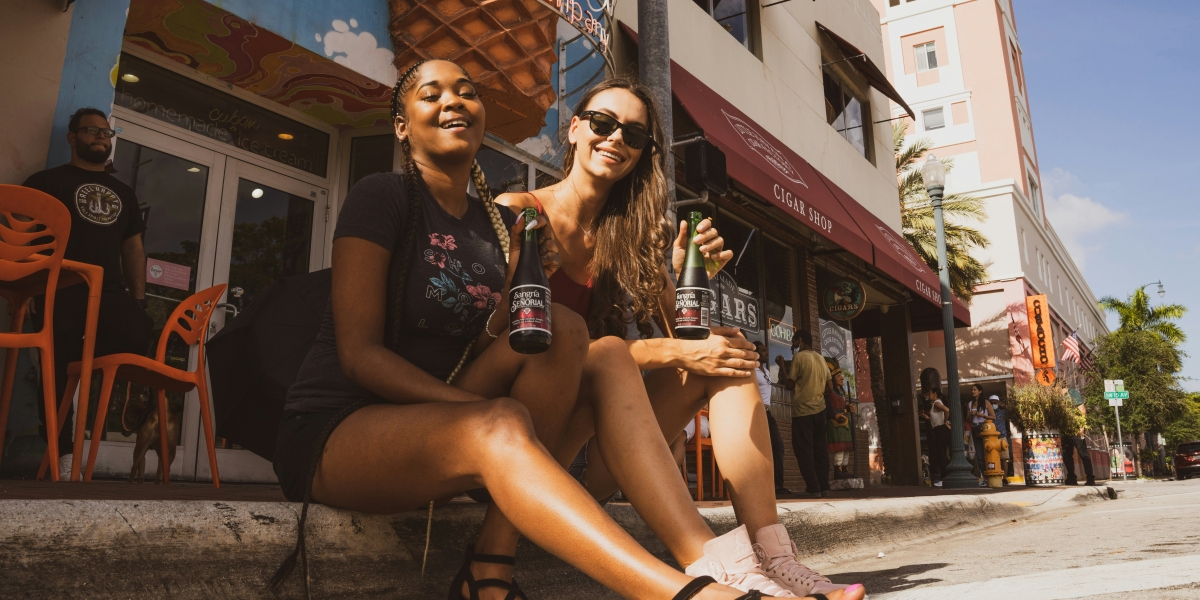
By the mid-1960s, Calle Ocho had become the symbolic spine of the community. Cafés, bodegas, cigar factories, and Spanish-language newspapers replaced aging storefronts. Churches and social clubs anchored daily life, while political debate — especially opposition to Castro — animated nearly every public space.
The neighborhood’s cultural institutions became just as important as its businesses. Domino Park emerged as a gathering place for elderly exiles, while Cuban radio stations turned Miami into the epicenter of anti-Castro broadcasting.
“Little Havana wasn’t nostalgia — it was reconstruction,” said María Cristina García, a historian at Cornell University and author of Havana USA. “Exiles were recreating civil society in real time, with the expectation that exile was temporary.”
The Freedom Tower and Political Identity
No building better symbolizes Cuban exile history than the Freedom Tower, which served as a processing center for Cuban refugees during the 1960s. There, arrivals received medical care, paperwork, and assistance in starting new lives.
The experience left a deep political imprint. Cuban exiles, shaped by authoritarian loss, became one of the most politically mobilized immigrant groups in the country. Over time, they built formidable influence in local, state, and national politics.
“We lost a country, so politics became personal,” said Jorge Mas Canosa in a widely cited interview during the 1990s, reflecting on why Cuban Americans organized so aggressively in the U.S. Mas Canosa would go on to found the Cuban American National Foundation, a powerful lobbying force in Washington.
Cultural Permanence and Evolution
Although early exiles believed they would return to Cuba, Little Havana gradually became permanent. New waves of migrants arrived during the Mariel boatlift in 1980 and the balsero crisis of the 1990s, diversifying the community economically and socially.
Music, food, and language cemented the neighborhood’s global identity. Cuban coffee windows, guayaberas, salsa rhythms, and murals of José Martí turned Little Havana into a cultural export — one recognized worldwide.
“Little Havana tells the story of exile becoming heritage,” said García. “It is no longer just about loss. It is about continuity across generations.”
A Changing Neighborhood, A Lasting Legacy
Today, Little Havana faces rising rents, demographic shifts, and gentrification pressures. While Cuban Americans remain culturally dominant, newer residents from Nicaragua, Venezuela, and other Latin American countries have added layers to the neighborhood’s identity.
Yet its symbolic role endures. Calle Ocho remains the site of political rallies, cultural festivals, and moments of collective memory — especially during major events involving U.S.–Cuba relations.
“Even as Miami changes, Little Havana remains a moral compass for the exile story,” Grenier said. “It reminds people what displacement can create when community is preserved instead of erased.”
More than six decades after the first refugees arrived, Little Havana stands as a rare example of an immigrant neighborhood that did not fade with time — but instead reshaped an entire city, leaving an imprint that extends far beyond Miami’s borders.