
The April 13 performance at Clarke Recital Hall reflects a broader shift in Miami’s experimental arts scene, where found-object philosophy and digital technology are reshaping what a concert can be
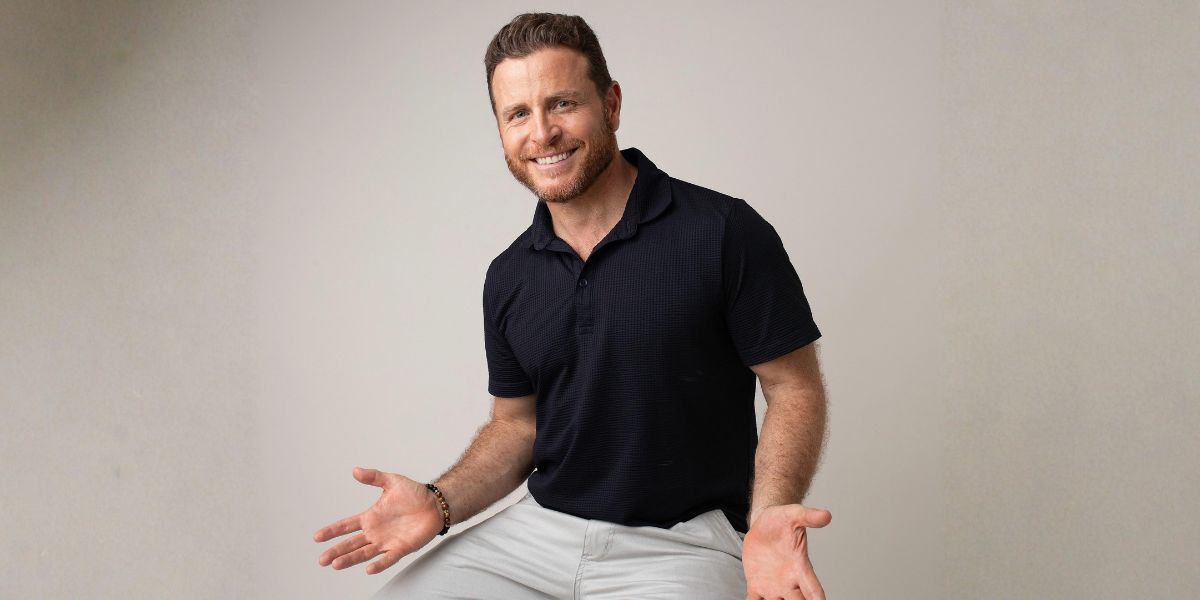
On April 13, the Frost Electroacoustic Ensemble performed at Clarke Recital Hall on the University of Miami campus in a set that challenged nearly every assumption about what belongs in a concert space. Led by composer and multimedia artist Juraj Kojs, the ensemble used toy instruments, household objects, ambient electrical hum, and room air as raw material — feeding those sources into custom circuits and software that transformed them in real time into layered, evolving musical textures.
The performance was not an outlier. It was a window into a specific cultural moment that is taking shape across Miami this April — one defined by the intersection of machine logic, human creativity, and the artistic potential of the overlooked and ordinary.
What the Frost Electroacoustic Ensemble Actually Does
Understanding what made the April 13 performance distinctive requires some context about the ensemble’s approach to sound.
The Frost Electroacoustic Ensemble, known as FEE, operates under a philosophy that questions the traditional boundary between instrument and object. In a conventional concert, the sound sources are defined in advance — strings, brass, woodwinds, percussion. In an FEE performance, the sound source might be the click of a plastic toy, the rustle of paper, the low-frequency hum of electrical current, or the ambient noise of a room’s air handling system.
What transforms those sources into music is the ensemble’s use of live electronic processes. Rather than triggering pre-recorded samples or layering pre-composed tracks, the performers route physical sounds through custom-built circuits and software that manipulate them in real time. A click becomes a rhythmic bassline. A piece of crumpling paper becomes something resembling a digital rainstorm. The transformation is immediate, visible, and — because the software responds to performers in ways that are not fully predictable — somewhat unpredictable.
Kojs has described technology in his work not as a tool but as an active collaborator. The software does not simply execute instructions. It reacts, introduces variation, and occasionally surprises the performers themselves. That quality — the sense that something unplanned might happen at any moment — gives FEE performances a tension that distinguishes them from standard electronic music presentations, where outcomes are more tightly controlled.
The April 13 set at Clarke Recital Hall demonstrated those principles in a space that is, by design, associated with formal musical tradition. The juxtaposition was part of the point. A recital hall built for piano and violin becomes, in the ensemble’s hands, a laboratory where the rules about what counts as an instrument are set aside entirely.
The Miami Context: A Month of Machine and Human Dialogue
The FEE performance arrived at a moment when several other significant cultural events in Miami are exploring related questions about the relationship between technology, creativity, and human experience.
Lawrence Lek: NOX Pavilion at The Bass
On view at The Bass museum through April 26, Lawrence Lek’s NOX Pavilion offers a visual counterpart to what FEE is doing with sound. Lek uses computer-generated film and a physical architectural pavilion to tell the story of NOX, a fictional therapy center for self-driving cars. The work asks what it might mean for machines to have inner lives — to experience something like mental health, identity, or distress.
The conceptual overlap with FEE’s work is direct. Where Kojs uses circuitry to give household objects a kind of voice, Lek uses speculative fiction and AI-generated imagery to project interiority onto machines that are typically understood as purely functional. Both practices ask audiences to extend their perception of agency and expression beyond the human.
The Bass installation includes an interactive component in which visitors participate as trainee therapists for broken-down AI vehicles, making the experience physically immersive rather than purely observational.
O, Miami Poetry Festival
Running throughout April, the O, Miami Poetry Festival operates on a premise that aligns with both FEE and the Lek exhibition: that poetry, and by extension art, belongs in places and forms that fall outside conventional presentation. The festival places verse on city infrastructure, projects it onto public objects like the Betsy Orb, and finds ways to bring language into spaces where it is not typically expected.
The shared logic across all three events — FEE, the Lek installation, and the poetry festival — is the same. Ordinary things, ordinary spaces, and ordinary systems contain expressive and artistic potential that is usually invisible. The work of the artist is to make that potential audible, visible, or legible.
UNSIN Music Festival: April 22–24
Later this month, from April 22 through 24, the experimental energy currently concentrated at Clarke Recital Hall and The Bass will migrate to Wynwood for the UNSIN Music Festival and Conference. The event focuses on creative exchange and new artist development within experimental and avant-garde music, extending the momentum that performances like the FEE set have built through the earlier part of April. For those who missed the April 13 performance, UNSIN offers another point of entry into Miami’s experimental music conversation.
What This Signals About Miami’s Cultural Direction
The cluster of events happening in Miami this April is not coincidental. It reflects a deliberate and ongoing shift in how the city understands its own cultural identity.
Miami has long been associated with nightlife, tourism, and visual spectacle — Art Basel being the most internationally recognized example. What is emerging now is something more granular and year-round: a creative technology scene that draws on the city’s density of artists, academic institutions like the University of Miami, and a growing interest among both local and international practitioners in work that sits at the boundary of art, science, and philosophy.
The found-object philosophy that defines FEE’s practice is particularly well suited to a city like Miami, where the textures of everyday life — heat, humidity, the sounds of dense urban neighborhoods, the hum of infrastructure — are distinctive and immediately available as raw material. Kojs and the ensemble are, in a sense, making music out of the city itself.
For audiences new to experimental music, the barrier to engagement is lower than it might seem. The work does not require prior knowledge of electronic music history or academic theory. It requires only a willingness to listen differently — to hear in the click of a toy or the rustle of paper something that can be stretched, shaped, and made into something else entirely.