
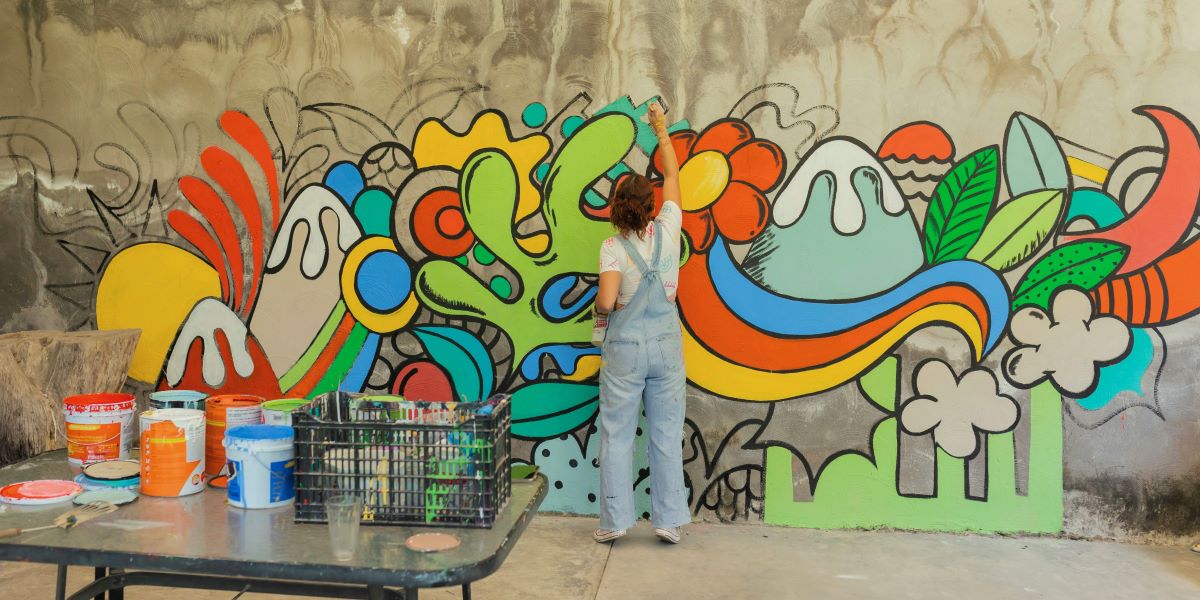
Wynwood street art covers the walls of a former garment district just north of downtown Miami, turning warehouse facades into a neighborhood-wide outdoor gallery. The shift began in the early 2000s and accelerated after the Wynwood Walls launched in 2009. Today the murals span a 50-block arts district overseen by a City of Miami board.
Key Takeaways
- Through the mid-to-late 1900s, Wynwood was home to Miami’s Garment District and an enclave for Caribbean immigrants.
- The neighborhood became the center of Miami’s Puerto Rican community, earning the nicknames “Little San Juan” and “El Barrio.”
- Developer Tony Goldman acquired underused industrial buildings in the early 2000s and launched the Wynwood Walls in 2009.
- The Wynwood Business Improvement District, a municipal board of the City of Miami, has operated since 2013.
- As of the BID’s 2020 street guide, the district held about 200 murals and drew more than 5 million visitors a year.
- Wynwood sits north of Downtown Miami, south of the Design District and Little Haiti, between Edgewater and Allapattah.
Before the Murals, Wynwood Was Miami’s Garment District
Long before Wynwood street art drew visitors, the neighborhood was a place of work. Through the mid-to-late 1900s, it was home to Miami’s Garment District, lined with warehouses, factories and textile wholesalers, and it served as an enclave for Caribbean immigrants.
Puerto Rican families became the heart of that community. Many arrived for jobs in the garment trade, and the area became the main enclave of Miami’s Puerto Rican population, known as “Little San Juan” or “El Barrio.” Small restaurants, shops and stalls run by Puerto Rican families shaped daily life on its streets from the 1950s onward.
As manufacturing declined, Wynwood went through a period of economic hardship. Many warehouses sat underused, and their large, windowless walls would later become the neighborhood’s defining canvas.
How the Wynwood Walls Launched the Wynwood Street Art Era
The turning point came in the early 2000s. Tony Goldman, a developer known for his role in revitalizing New York’s SoHo and Miami’s South Beach, began acquiring underused industrial buildings in Wynwood. His idea was to turn blank warehouse walls into works of art and use art to draw people back into the neighborhood.
In 2009, that vision took shape as the Wynwood Walls, an open-air installation that invited internationally known street artists to paint the walls of the old warehouses. Goldman died in 2012, but the project he started set off a much broader change.
The murals did not stay contained. Artists and property owners extended them across the surrounding blocks, and over time the art spread well beyond the original walls, onto building sides, storefronts and even sidewalks.
What Wynwood Street Art Looks Like Today
Wynwood today is an open-air gallery spread across an entire district rather than a single site. As of the Wynwood BID’s 2020 street guide, the district held about 200 murals across its 50 city blocks and welcomed more than 5 million visitors a year. The murals change over time, with walls repainted as new artists are commissioned, so the neighborhood rarely looks the same from one year to the next.
That constant renewal is part of what defines Wynwood street art. A visitor can walk the district and see work by international names next to pieces by local Miami artists, alongside galleries and studios housed in the old warehouse buildings.
The Wynwood BID Manages the Neighborhood’s Growth
Since 2013, the Wynwood Business Improvement District, a municipal board of the City of Miami, has represented the 50-block arts district. The BID works to build on Wynwood’s role as a recognized arts destination while planning for the neighborhood’s future, from public space to how the district handles its growing number of visitors.
What Wynwood’s Transformation Means for Miami
Wynwood’s rise reshaped Miami’s creative economy and its real estate market. The former garment district now draws artists, galleries, new residential buildings and a steady flow of visitors, and the change has also reshaped who lives and works in the neighborhood that once was “Little San Juan.”
The neighborhood’s next chapter is already taking shape, with Carnegie Mellon University’s planned 35-acre campus in Wynwood pointing to a district that is adding research and education to its identity as an arts hub. For a place that began as warehouses and factories, it is one more step in a long run of reinvention.
FAQs
What is Wynwood known for?
Wynwood is known for its street art. Its former warehouse walls are covered in large-scale murals, making the neighborhood an open-air gallery across a 50-block arts district.
Where is Wynwood in Miami?
Wynwood sits just north of Downtown Miami. It is bordered by the Design District and Little Haiti to the north, Edgewater to the east and Allapattah to the west.
When did Wynwood become an art district?
The transformation began in the early 2000s, when developer Tony Goldman started acquiring underused warehouses. It accelerated in 2009 with the launch of the Wynwood Walls.
How many murals are in Wynwood?
As of the Wynwood BID’s 2020 street guide, the district held about 200 murals across its 50 city blocks. The number shifts over time as walls are repainted with new work.
What does the Wynwood BID do?
The Wynwood Business Improvement District is a municipal board of the City of Miami that has represented the arts district since 2013. It works to build on Wynwood’s role as an arts destination and to plan for its future.